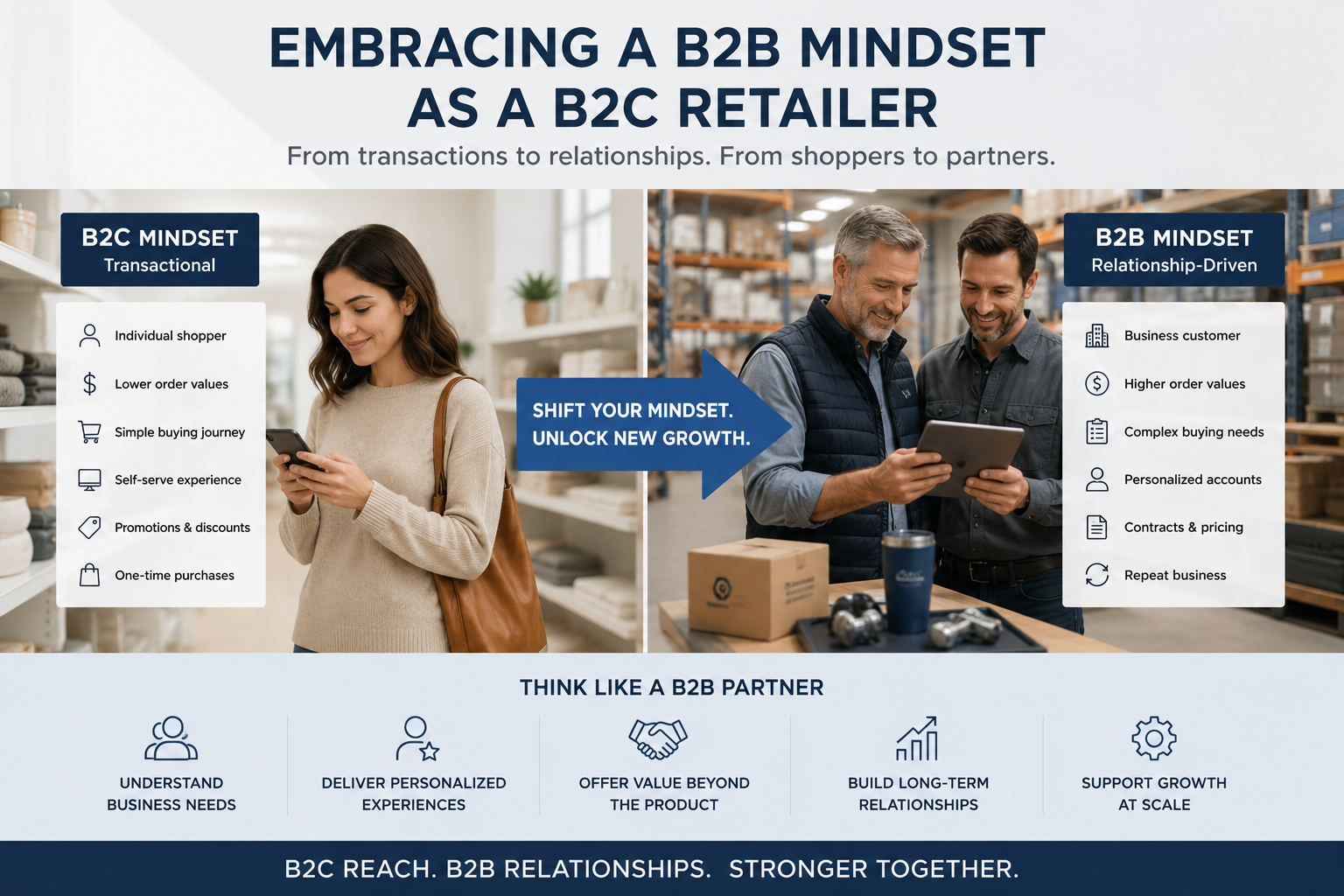
In traditional retail, the customer is usually viewed as an individual consumer. In B2B retail, the customer may be a company, a department, a team, a location, a project, or a professional buyer.
This matters because businesses do not buy the same way individual consumers do. A consumer may buy for personal use. A business buys to solve an operational need, serve its own customers, support employees, complete a project, or represent its brand.
For example, a clothing retailer may not only sell to shoppers. It may sell uniforms, branded apparel, team outfits, or event clothing to companies and organizations. A specialty food retailer may not only sell to households. It may sell corporate gifting, meeting snacks, client baskets, or recurring office orders. A home goods retailer may serve property managers, stagers, hospitality operators, and office designers. A beauty or wellness retailer may serve spas, gyms, salons, hotels, or employee wellness programs.
The products may be familiar, but the use cases become broader.
When retailers think this way, they stop seeing their audience only as foot traffic or website visitors. They begin seeing a larger ecosystem of buyers who may need the same products again and again.