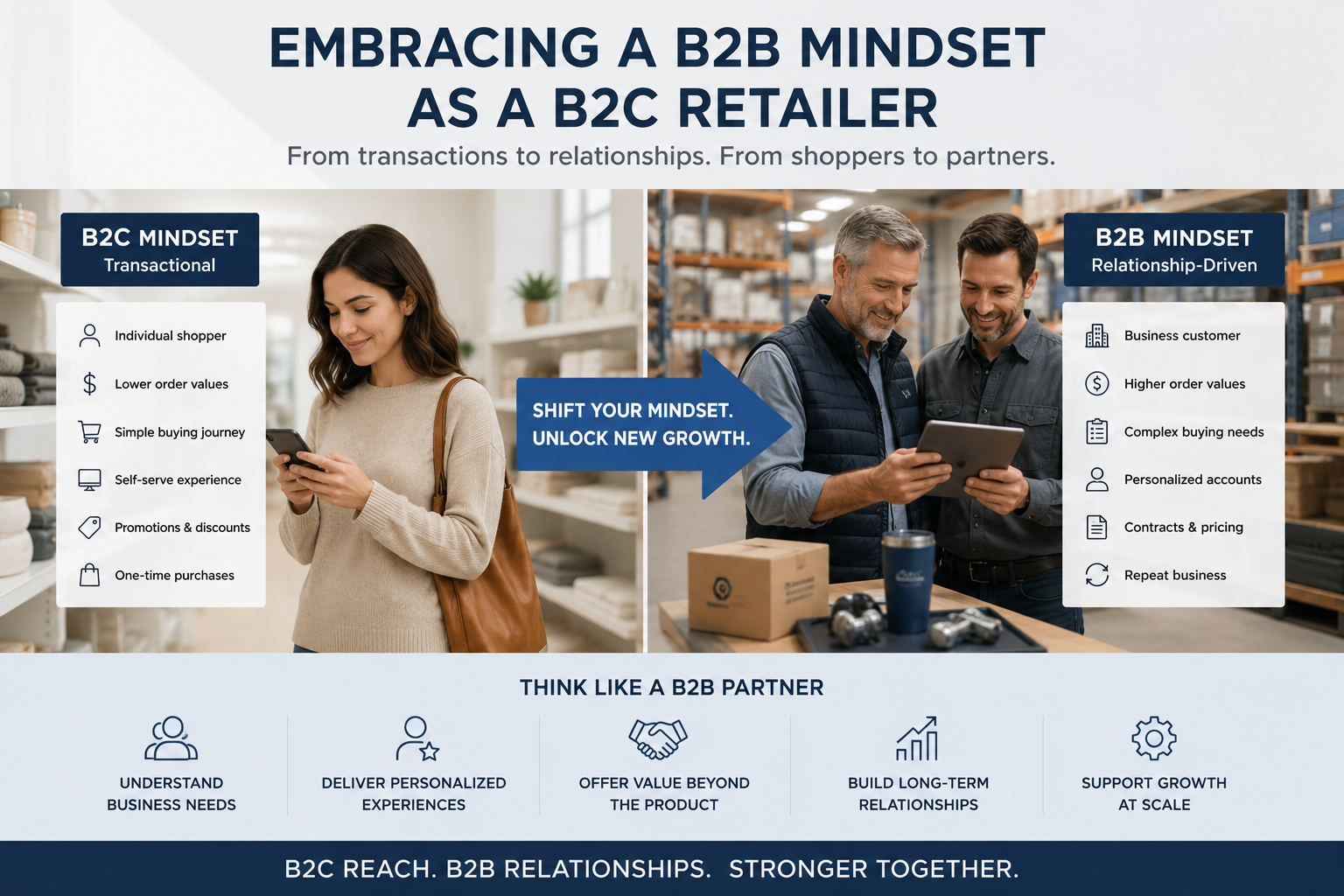
That model still matters. The individual consumer remains the foundation of retail. But for many B2C retailers, there is a major growth opportunity hiding in plain sight: the business customer.
Small businesses, offices, schools, hospitality groups, designers, contractors, event planners, property managers, corporate teams, real estate professionals, nonprofits, healthcare practices, and local organizations all buy products that traditional retailers already sell. They may need apparel, food, furniture, supplies, gifts, décor, equipment, technology, beauty products, wellness items, or specialty goods.
The issue is not always product-market fit. Many retailers already have products business customers want. The issue is mindset.
A B2C retailer often waits for customers to come in and buy. A B2B sales mindset asks a different question: which organizations could use what we sell on a recurring, larger-scale, or more strategic basis?
That shift can open an entirely new layer of growth.
Series Content
The following micro-content series, is exploratory. We will dive deeper into each of these areas in another series for the Embrace a B2B Sales Mindset: Setting the Framework Series
- B2B Expands the Definition of the Customer
- Business Customers Can Create Larger Order Values
- B2B Relationships Can Drive Repeat Revenue
- A B2B Mindset Makes Retailers More Proactive
- B2B Selling Can Improve Inventory Planning
- A B2B Channel Can Reduce Dependence on Discounts
- B2B Growth Does Not Require Abandoning B2C
- The Shift Requires Infrastructure